College Football is the ONLY sport in the U.S. where pro/rel would work, and makes too much sense for it to be even considered.
4 Likes
Contract Law has to be the piece that reins this in a bit.
Good on the Huskies and Bulldogs for litigating their cases.
3 Likes
Relegation!
okay I don’t know crap about Soccer but that’s what it’s called right? I did watch some of that Welcome to Wrexham show 
1 Like
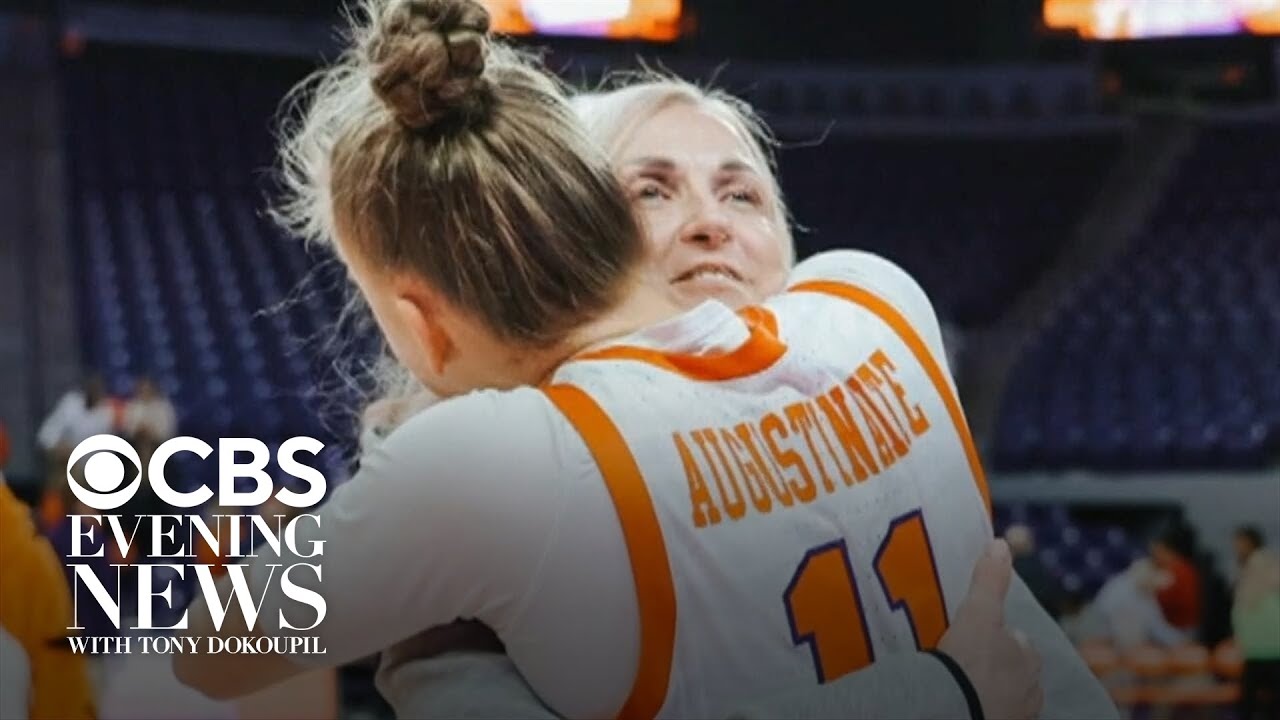
Before NIL the NCAA would never allow schools to do things like this. NIL gives players the opportunity. Good for the ladies at Clemson.
3 Likes
The Jaden Rashada Circus has left town.
1 Like
Stewart Mandel’s latest piece at the Athletic is hilarious. He imagines how DJT’s Save College Sports get-together may go. He has the voices of several characters in this drama with made-up quotes that are funny, but still not very far from what the person has actually said. This has the effect of driving home the point how ridiculous college sports is now.
The is a section that is especially impactful which I bring to you below.
+++++++++++++++++++++++++++++
Pro golfer Tiger Woods: “Hello, everyone. I have no idea why I’m here, either, but I did major in economics at Stanford, and I think I’ve identified the underlying problem: See, you’re operating a multibillion-dollar commercial enterprise while still maintaining a monopsonistic labor market. You keep trying to suppress the athletes’ wages to well below MRP, because you say you need the surplus profit to fund the cross country team, but then you turn around and spend most of the delta on your own salaries.
“You took a step toward rebalancing that dynamic with the advent of revenue-sharing, but there’s still a lot of cognitive dissonance in insisting those contracts are merely licensing agreements for their NIL rights, when we all know they’re pay-for-play deals. But of course, when Duke’s quarterback breaks the contract early to transfer to Miami, then you insist that the agreement bound him to the school like a pro player to his franchise.
“You’ve created a hybridized economy where the tension between treating the athletes as commercial assets while still insisting they’re merely ‘student-athletes’ cannot be sustained in a healthy and meaningful way.”
(Blank stares throughout the room.).
Private equity executive Gerry Cardinale: “I think he’s trying to say you need to admit the athletes are employees.”
Every university president and/or chancellor in attendance: “Absolutely not! If athletes are considered employees, then they could be terminated like employees, which of course never, ever happens now. Why would any of them want that?”
1993 Heisman Trophy winner Charlie Ward: “Good question. Maybe we could ask some of them?”
(Rabid laughter throughout the room.)
5 Likes
Another interesting article about NIL and the College Clearinghouse.
The CEO of the College Sports Commission, the new body charged with approving athletes’ outside name, image and likeness (NIL) deals, said Tuesday that the organization is encountering unexpected challenges due to a surge of school-affiliated deals that may not comply with the rules the schools themselves established.
Bryan Seeley, a former Major League Baseball executive hired to oversee compliance with last year’s House settlement, said the system was not designed to handle so many deals in the recent football portal window that were made by “associated entities” such as schools’ NIL collectives, multimedia partners and apparel providers.
Some of those deals guaranteed players millions of dollars without having yet received approval through NIL Go, the clearinghouse used by the CSC. Yahoo! Sports reported later on Tuesday that 18 Nebraska football players were in the process of challenging the CSC’s rejection of deals totaling more than a million dollars.
“The massive increase in associated deal volume of this kind of manufactured NIL is leading to some increased review times in NIL Go,” Seeley said during a call with reporters. “I don’t think the system was designed with this amount of associated deals in mind.”
The CSC was established to enforce the new college sports revenue-sharing model under the House settlement. Under the terms of the settlement, college athletes are required to submit any NIL deals from third-party entities — those outside of a school’s direct revenue-sharing cap — that are over $600 through the NIL Go platform for review. Those deals do not count toward a school’s annual revenue sharing cap, which is roughly $20.5 million for the 2025-26 academic season.
CSC’s latest data, published Tuesday and including deals submitted in January and February, showed an increase in the number of deals submitted, which Seeley said coincides with the college football transfer portal window. Seeley added that it’s an encouraging sign because it suggests athletes are reporting deals and utilizing the system as intended.
However, he also noted an increase in third-party deals from associated entities, which the CSC considers “subject to increased scrutiny” for approval. That increase has led to longer reviews for many of those deals and has made CSC guidelines more difficult to enforce.
A person working in the NIL space told The Athletic that those deals take at least several weeks to process and, even then, are often returned for more information.
CSC reported that, through the end of February, NIL Go has cleared more than 21,000 deals worth a combined $166.5 million but has not cleared 711 deals worth a combined $29.3 million. Through January and February 2026, more than 3,700 deals worth a combined $39.3 million were cleared, while 187 deals worth a combined $14.4 million were not cleared.
Since the NIL Go platform launched last June, 50 percent of submitted deals have been resolved (either cleared or not cleared) within 24 hours, and 70 percent have been resolved within a week of all required information being submitted, according to the report.
However, the report also stated that the number of third-party deals, specifically those from associated entities, submitted by power-conference athletes over the past two months has increased by 65 percent.
According to Seeley, the CSC defines an associated entity as, essentially, “an entity that’s either controlled by a donor or is working on behalf of the school to help retain and recruit student athletes.”
Ole Miss quarterback Trinidad Chambliss’ national AT&T commercial or Arch Manning’s Warby Parker ad don’t involve associated entities, but a deal from a booster-led NIL collective does. Many third-party NIL deals also originate from multimedia rights (MMR) partners such as Learfield or Playfly that manage a school’s sponsorships, or apparel partners (such as Nike or Adidas), and the CSC treats those as associated entities. Hence, there is an increase in review times and accompanying challenges.
“What I’ve been told is that there was a belief among many that perhaps up to 90 percent of deals flowing through the system would do so automatically, that would not need any kind of human review,” Seeley said. “So the bottom line is, there are changes we need to make in the system that we are working on making that I think will improve things.”
Third-party NIL deals, which provide over-the-cap dollars, have become crucial to the ongoing financial arms race in college sports, particularly football and basketball, with top programs exerting to spend above their revenue-sharing allotment.
There are those in the industry claiming that some football programs will spend north of $40 million on their rosters for the 2026 season, which is more than double the full revenue share pool for every sport in the entire athletic department, meaning a lot of that money — a majority, for some schools — would be earmarked from third-party, over-the-cap deals.
If a star quarterback or top player is reportedly earning $4 million this season, there’s a high likelihood that some or most of it is budgeted outside of revenue sharing. And a lot of it is reportedly coming in the form of front-end guarantees through MMR and apparel agreements, big-money deals that Seeley says run counter to House settlement rules.
“There’s no question that during the portal, agents were demanding guaranteed NIL for student athletes and schools felt pressure to guarantee those things, even though such guarantees are not within the rules,” Seeley said. “I think any athletic director would tell you that.”
Challenges with NIL Go and third-party deals are just two of the persistent obstacles the CSC has faced since the settlement took effect last summer. Another is the participant agreement, which would require participating schools to cooperate with investigations and enforcement decisions made by the CSC and prevent them from filing lawsuits that challenge those rules, but has not yet been signed.
The CSC’s enforcement arm has quietly conducted investigations into various programs, but there have been no known violations or penalties handed down, sparking some criticism within the industry.
“Until we build a structure to enforce the rules that are in place, we are constantly just putting bandages over issues,” Ohio State football coach Ryan Day said Tuesday. “My concern, more than anything, is that we are raising a young group of college coaches that see it that way, it’s becoming their normal. … Once we get that addressed, we can deal with everything else, but until then we are going to have a situation where people will try to get around the rules.”
Seeley acknowledged Tuesday that the pushback from certain factions against signing the participant agreement has contributed to the lack of enforcement.
“The participant (agreement) is a key tool to giving the CSC the enforcement powers and needs,” Seeley said. “That doesn’t mean without the participant agreement, it’s impossible, but I don’t think you’re going to see enforcement at the speed with which the schools want it.”
He added that there are currently 15 people on staff with the CSC, but that a lack of staff is “not a large contributing factor” to the enforcement challenges.
“I would say a lot of this is problems with the system just not being designed to handle this,” Seeley said.
As the CSC aims to adapt and improve its operations, the tests will continue. Both the men’s and women’s college basketball portal windows open in early April, less than a month away.
1 Like
Snip from Stewart Mandel piece in The Athletic today:
Senator Tommy Tuberville has the right strategy to ‘Save College Sports.’ … Really
By Stewart Mandel
March 27, 2026
A familiar-sounding press release hit my inbox Tuesday afternoon: Yet another politician was proposing yet another bill to “save college sports.” This one came from Tommy Tuberville, the esteemed Alabama senator and former Auburn coach who led the Tigers to the 2004 Golf Digest national championship.
But I read the full bill, which, mercifully, was even briefer than his tenure at Texas Tech. And I will now write a sentence I never imagined I’d write about any politician.
The bill is … smart. Really.
Previous “save college sports” proposals — most notably the terminally stalled SCORE Act— have attempted to solve every existential college athletics issue in one fell swoop, with wildly contentious solutions. Prohibit athletes from ever becoming employees. Cap NIL earnings. Give the NCAA blanket authority to set whatever rules it chooses.
Not surprisingly, there is little bipartisan agreement on any of it.
Tuberville’s “Student-Athlete Act,” though, addresses two narrow and fairly noncontroversial issues: the transfer portal and eligibility.
He proposes allowing athletes to transfer and play immediately just once in their careers, as well as a fixed eligibility term of “five consecutive years to play five seasons.”
The latter issue is particularly pressing, given the recent surge of lawsuits by athletes seeking to extend their careersto the point of absurdity. The floodgates first opened in 2024 when Vanderbilt quarterback Diego Pavia successfully convinced a judge that his junior college seasons should not count against his FBS eligibility. More recently, Ole Miss star Trinidad Chambliss earned a sixth year by reclaiming a medical redshirt from his time at Ferris State despite there being no evidence he ever applied for a medical redshirt.
As for the transfer portal, the NCAA originally instituted its own one-time transfer exception in 2021. It lasted barely two years. A coalition of state attorneys general filed a lawsuit in West Virginia claiming that any transfer restrictions whatsoever violated antitrust law. A judge granted their injunction request, the NCAA settled the case and unlimited free agency became law of the land.
Tuberville’s bill would grant the NCAA a limited antitrust exemption for transfer rules.
It’s too early to say whether his proposal will gain any traction among his colleagues. The senator himself tempered expectations Thursday at an unrelated Senate committee hearing about college sports. “Probably won’t get enough support to pass, but we have to start somewhere,” he said.
Regardless, the strategy behind it may well be his smartest game plan since he beat Nick Saban in the 2007 Iron Bowl.
College Sports Inc. (the NCAA, the universities, the conferences) has spent the past five years banking on Congress to save it from the ever-growing mess it created. The problem is, their asks are too divisive to get through to the finish line.
The Establishment’s current Plan A, B and C, the SCORE Act, may eventually land enough votes to pass in the narrowly divided House, where supporters now hope to bring it to the floor sometime next month. But it’s never going to pass the Senate, because its fundamental declaration that no college athlete may be considered an employee of an institution is a non-starter for Democrats. A critical blow came last summer when the players’ associations for the NFL, NBA, MLB, NHL and MLS went public with their opposition to the bill.
Suppressing name, image and likeness wages is not wildly popular with those folks, either.
“The SCORE Act has many good elements, it’s a very good first step,” Sen. Ted Cruz said at a March 6 White House roundtable, where President Donald Trump convened a panel of random dignitaries to discuss the future of college sports. “But … for this to be passed into law and put on (President Trump’s) desk, we need 60 votes in the Senate, which means we need at least seven Senate Democrats (to support it). Right now, there are zero.”
Even some Republicans are leery of various aspects of the bills. An expected House vote got shelved last December due to concerns about giving the NCAA too much power with a blanket antitrust exemption, or bailing out universities from their own reckless spending. Sources at the time said it was no coincidence the bill got shelved the same week Lane Kiffin bolted Ole Miss before its College Football Playoff run for a $91 million deal from LSU.
No one will say anything publicly, but privately, some key decision-makers have accepted the reality that the bill will not pass as long as the employment ban is in it. They have already begun plotting a more incremental approach.
Tuberville’s bill is essentially that, though it’s probably too narrow to gain widespread support. Which is unfortunate, because it’s such a seemingly simple ask.
If one were to poll the general public, they’d tell you it’s not the multimillion-dollar “NIL” deals that aggravate them; it’s that schools use them to poach other teams’ players. They’ll say it’s impossible to keep up with their teams’ rosters every year because of the mass turnover. A one-time exception wouldn’t eliminate all movement, but it would at least slow the frenetic pace.
Of course, it comes with the significant caveat that a court of law already struck the thing down once. Legal challenges would inevitably pour in again if the one-time rule returns. But federal legislation carries a lot more teeth than the NCAA rulebook.
And unlike attempts to limit athletes’ compensation — which Supreme Court justice Brett Kavanaugh declared to be “flatly illegal” in the 2021 NCAA v. Alston decision — the NCAA has a defensible case for limiting transfers. Which is: changing schools every six months is not conducive to the “student” part of student-athlete.
Meanwhile, I see no reason why putting a kibosh on eighth-year quarterbacks (Joey Aguilar) or professional basketball players (Charles Bediako) would engender a partisan divide. Truly no one wants these things. And they tangibly harm high-school recruits.
Please don’t misconstrue this column as an endorsement of Tuberville’s larger agenda, or that of any other politician in either party. I became a college sports writer hoping to avoid ever covering politics, but politics keeps sticking its nose into college sports.
If passed, Tuberville’s bill would have immediate, positive impacts on at least a couple of the sport’s most pressing issues.
But sadly, like his 2004 Auburn team, it probably doesn’t have the votes.
1 Like
An Athletic article that talks about 18 Nebraska football players losing their appeal on the nixing of their NIL deals. Apparantly, there were no promotion or commercial commitments in them.
Arbitrator upholds ruling denying NIL deals worth $7.5 million to 18 Nebraska football players

An arbitrator upheld a ruling that denied the NIL deals for 18 Nebraska football players worth a combined $7.5 million. Eric Francis / Getty Images
By Stewart Mandel, Mitch Sherman and Matt Baker
May 11, 2026 Updated May 12, 2026 11:42 am EDT
In a much-anticipated ruling in college athletics, an arbitrator upheld a College Sports Commission decision denying the NIL deals of 18 Nebraska football players worth a combined $7.5 million.
The case was the first major test of an NIL enforcement process that the Power 4 conferences established following last summer’s House vs. NCAA settlement. It involved PlayFly Sports, a multimedia rights company that has partnerships with Nebraska and dozens of other athletic departments. The CSC, which reviews all major third-party NIL deals, denied the Nebraska players’ deals because it considers PlayFly an “associated entity” of the school, much like an NIL collective.
Attorneys for the players subsequently took the case to arbitration, as required by the House settlement. The CSC announced Monday that the arbitrator affirmed its interpretation of PlayFly as an associated entity, and that the deals did not satisfy a “Valid Business Purpose.”
“Playfly appears to be guaranteeing certain payments to each student-athlete in exchange for performance of as-yet unspecified services that it hopes to sell in the future to some as-yet unidentified sponsor on an as-yet unidentified date, in promotion of an unidentified good or service for sale to the general public,” arbitrator Andrew M. Strongin wrote.
“… In effect, Playfly functions as a pass-through for University payments to its student-athletes in a way that was designed to bypass the (revenue-sharing) cap.”
Shortly after the announcement, Bryan Seeley, CEO of College Sports Commission, spoke with reporters while attending the ACC’s Spring Meetings at The Ritz Carlton in Amelia Island, Fla.
“I hope and expect that people at schools, people working in college athletics, will look at this ruling as a positive development to bring enforcement to this space,” he said. “I do think most people working in college athletics want robust enforcement. Not everyone, but most people. And so even if it’s not precedential, the fact is, it’s influential in people’s minds about how they think about enforcement.
“So to me, it was a good day.”
Central to their case, plaintiffs’ attorneys contended that Playfly does not serve as a recruiting tool for Nebraska because it is a for-profit company that has similar arrangements with several of Nebraska’s competitors, including those in the Big Ten. It noted that none of the 18 players were recruited from the transfer portal this year.
The arbitrator disagreed.
“It cannot seriously be disputed that payment of NIL to a student-athlete at least generally assists in the recruitment or retention of a student-athlete,” he wrote.
But more tests of the CSC await. As of April 30, 21 deals had been consolidated into three pending arbitration cases. Attorneys for individual athletes with more specialized or limited arguments could produce unfavorable outcomes for the CSC.
Additionally, Nebraska law prohibits any organization from penalizing a college athlete because he or she was paid for use of their NIL rights. The Nebraska attorney general could take action to prevent the CSC from enforcing penalties against Nebraska athletes who received payment as a result of their deals with PlayFly.
A spokesperson for the attorney general’s office declined comment on Tuesday.
Seeley believes the players already have new deals in the works that will comply with the rules and allow them to get paid without requiring litigation. The CSC has agreed to expedite its rulings for any new deals the Nebraska players submit, Seeley said.
And later this month, U.S. Magistrate Judge Nathanael M. Cousins is scheduled to address a motion filed by the House plaintiff attorneys seeking to exempt multimedia rights companies such as PlayFly from status as associated entities. If the judge agrees, the arbitrator ruling against Nebraska could lose much of its impact.
“I think it hopefully instills some faith in this system, but we still have a lot of work to do to get to where the schools want enforcement to be,” said Seeley.
The CSC system began on July 1 in conjunction with the advent of revenue-sharing in college athletics. Under the terms of the House settlement, schools could directly distribute up to $20.5 million to their athletes in 2025-26. Those deals do not require approval. However, any third-party deals the athletes receive in excess of $600 must be submitted to the CSC’s NIL Go platform to determine whether they comply with the rules.
According to a report last week, the CSC cleared more than 5,500 deals worth a total value of $75.85 million between March 1 and April 30, nearly double the $39.29 million cleared in the previous two-month period. Another 442 deals worth a total value of $26.87 million were not cleared.
In total, it has cleared 26,556 deals worth a total value of $242.35 million since implementing the system last summer, while denying 1,153 deals worth a total value of $56.17 million.
1 Like
Heard about this on the radio today, deep sigh!
5 Likes
This is Stewart Mandel’s column today in The Athletic about the fact that the Protect College Sports Act passed cloture in the Senate with over 70 votes for, which means it will likely pass, and Mandel’s opinion what it fixes and what it doesn’t.
The ‘Protect College Sports Act’ wants to fix college sports. Here’s what it actually targets

Sen. Maria Cantwell (D-Wash.), who co-authored the Protect College Sports Act with Sen. Ted Cruz, is focused on different aspects of the bill from her Republican counterpart. Chip Somodevilla / Getty Images
Sept. 18, 2026 Updated 7:06 am EDT
On Tuesday, the ballyhooed Protect College Sports Act took a big step toward a vote in the Senate. It passed cloture by a 74-24 margin, which means it will proceed to the floor for debate. Given the lopsided margin, the bill is expected to officially pass as soon as early next week.
It’s a testament to the power of effective messaging that the NCAA, the conferences and their lobbyists — not to mention Sens. Ted Cruz (R-Texas) and Maria Cantwell (D-Wash.), who co-authored the bill — managed to convince three-fourths of the Senate that the “chaos” of college sports was a crisis in need of federal intervention.
Because it’s unclear how the central components of the bill would solve the central components of the so-called crisis.
On Monday, I scrutinized some of the more suspect statements Cruz made during his “College GameDay” appearance this past weekend. Today, I’d like to turn to his Democratic counterpart.
This week, Cantwell rolled out a data-heavy report in a release titled “Runaway Athletics Spending Threatens the Financial Health of America’s Colleges.” Some of the numbers are undeniably alarming:
- “94 percent of all Division I athletics programs now spend more than they generate.”
- “A $520 million increase in institutional support from 2015 to 2025.”
- “15.2 percent of budgets being funded by endowments.”
Then it goes on to list the biggest causes of those soaring expenses: “From 2005 to 2023, schools saw increases of 322 percent in recruiting costs, nearly 300 percent in sports equipment, around 250 percent in both medical and game day expenses, and more than 200 percent in travel. Coaching salaries increased a whopping 370 percent over the same time period. And the problem is accelerating. Two years after a roughly $20 million roster was considered exceptional, industry surveys in 2026 placed several leading programs at $40 million or more.”
The Athletic can confirm the accuracy of that last part.
But notice the end date on the time period she is citing for that data: 2023. The House settlement, which ushered in revenue sharing in college athletics, was not passed until 2025. Which means, at the time of all those listed expenses, schools were still spending $0 on paying their athletes directly. Most name, image and likeness deals at the time were coming from outside collectives.
Yet when it comes to Cantwell’s grand solution to this problem, there is only one category of expenses in her and Cruz’s entire 171-page bill that would explicitly get capped: revenue sharing, of course. There is no attempt to rein in that 322 percent increase in recruiting costs or 370 percent increase in coaching salaries. (There’s probably not much they can do about equipment and travel costs.)
Even that new rev-share cap of $47.5 million doesn’t seem likely to result in any immediate decrease in spending, and if anything, schools’ combined spending might increase. Take a look at The Athletic’s new list of Power 4 roster budgets. If we assume most schools are spending around 75 percent of their revenue sharing allotment on football, then only the teams spending at least $35 million on football this year will approach $47.5 million across all sports. We believe that’s fewer than 20 out of 68 Power 4 schools. That leaves a whole lot of room for the others to keep adding. (And even the rich schools will only level out if you believe these caps will actually be enforceable.)
There is, however, one provision in the bill that doesn’t directly address athlete compensation but may prove to be effective at suppressing it: transfer portal restrictions.
The bill would give the NCAA an antitrust exemption allowing it to restore its 2021-23 policy that grants players a one-time exception to transfer and play immediately. Still, even that exception has a couple of exceptions. Players could transfer freely in the event of a coaching change. But also, graduate transfers will continue to be allowed to play right away. So we could still have players changing schools two or three times in a five-year career. But that’s still a big departure from the current model, in which every athlete is a free agent every year.
What effect could that have? Well, it could cost a lot less for coaches to retain the bulk of their rosters, because the majority of players will be stuck there the next year and therefore will have no leverage to demand a raise. The flip side of that, of course, is that transfers will have more leverage because of their scarcity. Perhaps an economist can tell us how those scales will balance.
But let’s say it works. Let’s say all those roster budgets in our story this week get frozen right where they are for the next five years. It doesn’t change the fact that all of the other out-of-control expenses that caused that $520 million rise in institutional support will still be there — and they’re going to keep going up. Problem not solved.
Interestingly, the two co-sponsors of the bill have expressed very different motivations for their involvement.
Yes, they both want to protect women’s and Olympic sports from the massive cuts everyone has been prophesying for five years but to this point have not remotely come to fruition. But Cruz, a fan of pretty much every Texas school, talks a lot more about the scourge of players transferring four or five times, hazy eligibility rules, “a booster in a back alley just showing up with a bag of cash.” The issues fans care about most.
Cantwell’s interest in this topic is rooted in what happened to her home-state school, Washington State, after the Pac-12 dissolved. Her pet topics: slowing down realignment (the bill caps conferences at 19 schools and makes it difficult for schools to change conferences) and standing up to the Big Ten and SEC. And her main solution to those is the so-called Cody Campbell plan, allowing conferences to pool their media rights and sell them as one package, which her report says “could bring in an additional $4 (billion) to $8 billion in media rights revenue, allowing athletic departments to be self-sustaining again.”
Two problems with that: 1) The conferences’ current TV deals run into the 2030s, so it’s going to be a while before it could even happen. And 2) Does it really matter? During that same 2005-2023 period, P4 conference revenues skyrocketed by 212.4 percent. In 2006, the Big Ten struck a deal with ABC/ESPN valued at $100 million a year. Its current deals with Fox, CBS and NBC, signed in 2023, are worth $1.1 billion a year.
And yet, her report cites Big Ten members UCLA, Minnesota, Wisconsin and Rutgers among those subsidizing athletics at the expense of academics.
But hey, 73 (at least) senators agree with her that this bill is the best way to “stabilize” those expenses. I don’t know how many of them read her report, but clearly the message has been received. We must rein in this one specific subset of runaway expenses that did not exist prior to 2025.
1 Like
Well, the Senate found the “Sledgehammer and Sawsall” it was looking for that works for the wealthy, and screws everything and everyone else.
2 Likes
The PCSA will pass the Senate but any version that passes the House (when/if they ever come back from recess) will look very different, and still has to go through reconciliation.
There are massive/fundamental differences in where the House is vs. where the Senate is on this bill. The most likely scenario is that it’s DOA in the House.
3 Likes

4 Likes
7 Likes