2026 CFP and Bowl Games Thread

Read that Cignetti’s priorities when he’s looking at portal players are 3+ years of experience, injury history (interesting) and reports from previous school’s staff on how they practiced.

Stays away from players who are looking for a “change in scenery” or were under achievers.

“I win. Google me”

4 Likes

Nope

5 Likes

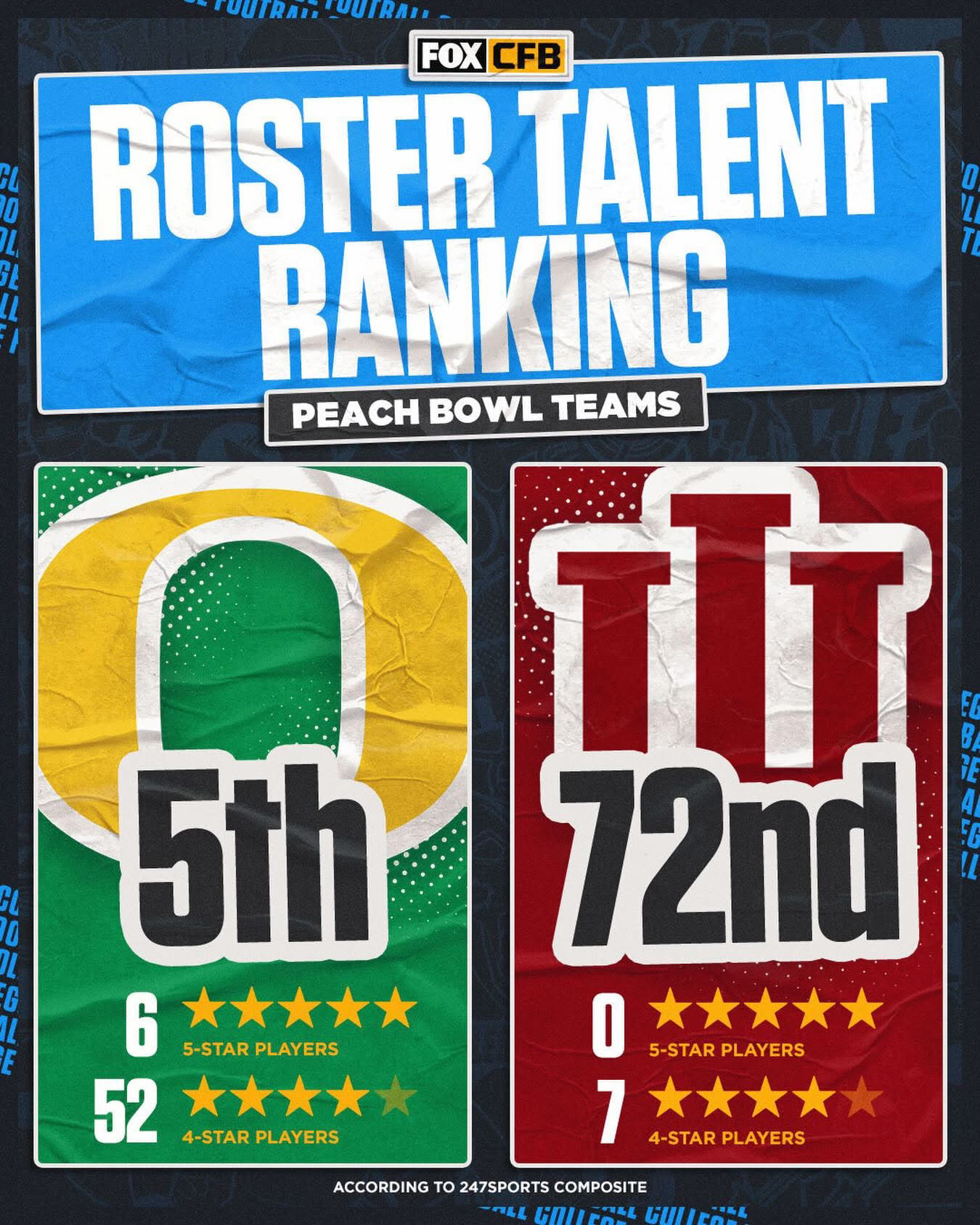
This stat is crazy.

Goes to show what talent development, team chemistry, and a generational QB can do.

I still suspect Indiana caught lightning in a bottle and they’ll be back to “usual” Indiana within a couple years, but props to them for figuring out that formula for this year.

7 Likes

it’s clearly Indiana’s year. I don’t expect IU to win the B1G again, but I do believe they’ve elevated their program into the top 20, and should remain there as long as their coach wants to stay.

Ma’ake pointed out their winning formula for working with the transfer portal. I hope Utah has noticed and is coping their approach.

7 Likes

Oregon’s record over the past several seasons is no joke. But if you were an Oregon fan, you’d have to wonder if that program will ever get over the hump. They have spent an obscene amount of money, even long before NIL.

7 Likes

I suspect in both FB and MBB there’s a decent formula, but sometimes you roll the dice on somebody with serious but up-tapped upside. Meriweather and in hoops Howard.

Recruiting in FB has always been that way, 85 scholies and some guys you hope hit their potential. We had a DT who was a complete freak physically - Bench 465 x 6 reps - but wasn’t really a football player.

In both hoops last spring, and in this FB transfer period mania, we’re starting out behind the curve (compared to IU and similar programs), staffs not yet put together, etc. More improv than we’ll see next year, is my guess.

Cignetti has had the same staff and refined his system over a number of years.

7 Likes

I have no idea if this is true, but I read somewhere that Mark Cuban is the money guy behind IU.

3 Likes

In a Shark Tank kind of way, Cuban was swayed by the collaborative, team based approach in Cignetti’s culture instead of just being the money behind bidding wars.

5 Likes

I recently toured IU with the kid. There isn’t much on that campus that he doesn’t fund. He blasted their new BOT for messing with the student newspaper when they were threatening that they couldn’t print anymore. He reminded them that he had given enough, they paid $0 for printing the paper.

Mark has made the Kelley Business School even more desirable. That said, Boiler Up!

2 Likes

Bravo!! :clap:

2 Likes

Here’s what AI says about how Indiana gets its NIL money:


Indiana University’s NIL (Name, Image, Likeness) money doesn’t come from a single “school-controlled paycheck” line item — it’s primarily funded by outside entities and supporters rather than the university’s general budget. Here’s how it works in practice: 

:small_blue_diamond: 1. NIL Collectives (Booster/Alumni-Led Funds)

IU has official NIL collectives — nonprofit or booster-backed organizations that raise and distribute money for student-athlete NIL deals:
• Hoosiers Connect: Fans and businesses can donate or sign up for memberships, and that revenue is used to support NIL opportunities for athletes. 
• Hoosiers For Good: A 501(c)(3) that pairs student-athletes with charities and other NIL engagements, also funded through donations and sponsorship support. 
These groups raised millions (a campaign topped $2 million with match funds from an anonymous donor) that flows into NIL deals. 

:small_blue_diamond: 2. Donors and Boosters

A big part of the cash comes from individual donors, alumni, and wealthy boosters:
• Anonymous donors have matched contributions to IU collectives (e.g., up to $1 million matching). 
• High-profile alumni like Mark Cuban (IU graduate and billionaire) have increased their NIL-related contributions, boosting IU’s NIL budget. 

:small_blue_diamond: 3. Local and National Business Sponsorships

Businesses — both local Bloomington outfits and national brands — pay student-athletes for promotional work, appearances, social-media posts, merchandise collaborations, etc. 
IU Athletics helps facilitate this with tools like the Indiana NIL Exchange portal (with Teamworks Influencer) to connect athletes with companies, but the payments come from the businesses themselves, not directly from university tuition or taxpayer support. 

:small_blue_diamond: 4. Direct Deals Between Athletes and Brands

Many athletes also secure individual deals:
• Through platforms like Opendorse or Campus Ink to sell personalized merchandise. 
• Through social media sponsorships and personal endorsements negotiated independently by athletes, agents, or collectives. 

:school: Important Distinction

Under current NCAA rules and widely practiced NIL policies:
• The university itself does not directly pay athletes from institutional revenue (like ticket sales or tuition) as NIL compensation. 
• Payments originate from third-party sources (collectives, donors, businesses, brand deals).

Bottom Line

Indiana’s NIL money comes from a mix of booster/alumni-led collectives, major donors, corporate sponsorships, and direct athlete deals, rather than being a line item paid by the school itself. High-profile fundraising and booster support have enabled IU to build one of the more substantial NIL budgets in the country. 
1 Like

I read all of that and all i came away with was “Mark Cuban”.

4 Likes

Yeah, my AI showed a very realistic photo of Mark Cuban in a bikini.

4 Likes

Cignetti has brought the new Moneyball to college football. He’s using metrics other people have overlooked and it’s paid off. He is Football’s Billy Beane using sabermetrics and he will have great success for a year or two but everyone is paying attention and will all soon jump on his bandwagon then it will balance again.

But cheers to him for leading out and showing a new way. Production over hype all the way.

5 Likes

Likely this was pre-House. Add this to House and you are looking at a lot of money.

3 Likes

Yep, production over potential. Did it at JMU, doing it at Indiana. Look the next level down (G5) and get the all-conference players and give them an opportunity to show it more nationally (and isn’t quite as expensive as getting 4/5-star and/or P4 transfers and as much entitlement). But copycats will do the same and thin out the talent and parity will ensue. He found what works now but every year or two will bring new changes/challenges. Those that adapt fastest will stay at the top.

7 Likes