I’ve always thought the whole concept beyond the Greenbay Packers was the model most teams should operate on.
4 Likes
I got this from AI and found it pretty helpful and somewhat reassuring. For whatever it’s worth:
Here’s a breakdown of what’s been announced about the deal between University of Utah and private-equity firm Otro Capital — and what that means for control, governance, and use of funds. It is a proposed/approved “first-of-its-kind” arrangement in college athletics (as of December 9, 2025).
⸻
What the deal is: structure & funding
• The University’s Board of Trustees unanimously approved creation of a new for-profit company called Utah Brands & Entertainment LLC. 
• The purpose of this company: to manage the revenue-generating, business/operational side of the athletics program — i.e. ticket sales, stadium/events, concessions, media/production, broadcasting, hospitality, licensing/merchandising/brand rights, and other commercial operations and revenue streams. 
• The idea is that this company will bring in a major cash infusion of more than US$500 million (from Otro Capital + possibly other donors/ supporters) to fund and stabilize the athletics department’s finances. 
• The new venture is described as being “part of the university structure but … outside of the athletic department.” ⸻
• The University (via its philanthropic arm/Foundation) retains majority ownership of Utah Brands & Entertainment. 
• The university also retains full control over key athletic-department decisions — including “sports, coaches, scheduling, operations, student-athlete care” and other core athletic or academic/athletic-related functions remain under the existing Athletics Department. 
• The board of the new company will be chaired by the university’s Athletic Director (Mark Harlan) and a majority of its board members will be appointed by the University/Foundation — not the private equity firm. 
• The private-equity firm (Otro Capital) will be a minority owner, contributing capital and expertise; they also will have a role in the “executive team” that runs the business operations of the new company alongside athletics-department personnel. ⸻
• Otro Capital’s investment (plus possibly donor commitments) aims to “infuse hundreds of millions” into the athletics program. The exact amount hasn’t been publicly confirmed, but “more than $500M” is the commonly cited figure. 
• The money is intended to support all athletics — not just marquee sports — including costs associated with newer realities in college sports (e.g. name-image-likeness (NIL) obligations, scholarships, operational costs, possibly facility upgrades, and overall financial stability. 
• In return, Otro Capital will receive a “percentage of the annual revenue” generated by Utah Brands & Entertainment. 
• There is a stated plan or expectation for an exit of the private-equity firm’s stake in 5–7 years. ⸻
According to the university’s public announcement:
• The deal “is not selling off the athletics department.” The athletics department’s core functions — student-athlete care, teams, coaches, scheduling, scholarships, NCAA compliance — remain under the university’s athletics department. 
• Facilities themselves (stadiums, venues) are not being handed over to the private equity partner under the current announcement. 
• Strategic and operational decisions about sports performance, team management, and academic/athletic balance remain under control of the university. ⸻
Potential benefits
• The infusion of hundreds of millions could stabilize athletics finances at Utah, helping with rising costs (scholarships, NIL, facility maintenance, recruiting, etc.). This may allow them to remain competitive, support a broad slate of sports (not just marquee ones), and avoid shifting costs to students, tuition, or taxpayers. 
• Bringing in experienced operators (from Otro Capital) for business operations — marketing, sponsorships, ticketing, media, events — could professionalize and optimize revenue generation, potentially creating a more sustainable model. Concerns / Criticisms (raised by observers / public commentators)
• Some worry that long-term profit motive could shift priorities: pressure to maximize revenue might favor high-profit (but possibly less equitable) sports, or influence ticket pricing, access, and fan experience down the line. As one Reddit commenter put it:“They’re selling the U out.” 
• Others fear private-equity involvement might lead to commercialization that undermines traditional collegiate values or could eventually squeeze out less profitable sports or aspects of athlete/student-centered mission. 
• There is uncertainty about what happens if revenues don’t meet expectations — who bears the risk, whether the university must commit additional funds, or if it impacts long-term commitments to athletes or non-revenue sports.⸻
• Decision-making control over what matters most for athletics (teams, coaches, student-athletes, competition, compliance) remains with the university.
• Operational control of business-side functions (ticketing, events, media, marketing, revenue generation) is being handed — at least in part — to the new for-profit entity, in partnership with the private equity firm.
• Private equity involvement comes with cash infusion and business know-how, but only as a minority owner. The university retains majority ownership and board/control.
• However, by outsourcing big revenue-generating functions to a for-profit partner, Utah is embracing a more business-oriented model for its athletics — which introduces commercial pressures and potential long-term tradeoffs.
2 Likes
I’ve been curious over the years as to the relationship that Pumas has with UNAM university in Mexico.
Pumas has a relationships with the university, but it plays in the professional top division of soccer.
After some reading, I found this:
Apparently, the “club” is owned by the university but the club is a professional and commercial entity administered by a council or board.
The team is still referred to as the UNAM (Universidad Nacional Autonoma de Mexico) Pumas.
Profits generated actually belong to the university.
I’m not sure that is all that far off from where we are headed in the new world of NIL/post- amateur college sports.
The situation doesn’t sound all that different from what Utah has created, other than some of that profit is going to be shared with the Otro group.
3 Likes
I am right there with you. One of the first things he accomplished as President was to shepherd a capital fundraising campaign with a goal of $1 Billion to reach over $3 Billion. I am quite confident in his ability to help this venture succeed.
4 Likes
He is 100% worthy of our confidence.
(Although the deep and touching concern of our rival’s fanbase about the appropriateness of this PE effort really has me worried.)
4 Likes
What’s in appropriate about it? The U has plenty of university owned businesses, think ARUP as the most obvious. I know that there are others in Research Park, just can’t remember their names.
3 Likes
If the big donors can buy into the LLC…
… why not the little donors? Why not turn it into a Green Bay Packers kind of model?
The shares may not be worth much, but the community ownership model would be reflective of the support Ute fans have provided over the years.
3 Likes
Not a single thing. I’m just making fun of the consternation about it that some of our Big 12 brothers down south are expressing. I imagine that many of them love very much the idea that they’ve got billionaires backing their NIL efforts, giving them a big advantage over Utah. Dreams die hard.
2 Likes
Research Park has a LOT of spinoffs from the U.
- Neurotechnology: Blackrock Neurotech, Ripple entities
- Biotech & diagnostics: Myriad, Predictive Biotech, Acacia, Allegro
- Medical devices: AccuBreath, 6S Medical, Advanced Conceptions
- Software & quality control: 4DQC
- Research Park Legacy Companies: ARUP, bioMérieux, Huntsman, etc.
2 Likes
a couple of things:
-
has this announcement delayed Whitt’s retirement, maybe that’s why we haven’t heard anything regarding his future?
-
does this expedite building a new hoops arena, expand RES?
2 Likes
Thank you for the names. I could only remember ARUP.
One thing that was mentioned in this regard is that the investors must be “qualified.” Now I am not a big $$ investor, but I have done one or two where I had to become “qualified” to invest. It wasn’t difficult. Essentially, I had to show some experience in stock investing as well as provide some financial information that showed the investment would not put me on the street if it didn’t pan out. One did quite well and I got back my initial investment and then watched the other gains I had made get flushed down the toilet. The other never achieved anything and I am just watching it continue to circle the drain because it can’t go lower then 0.
1 Like
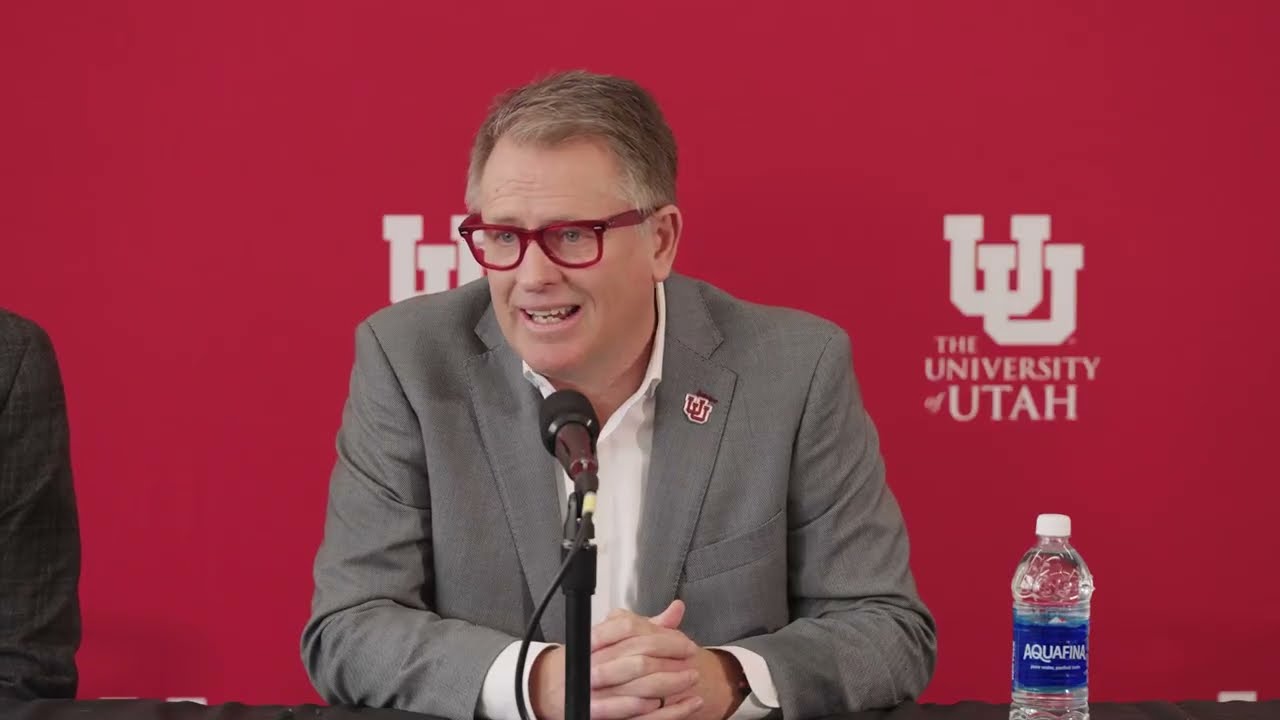
This is really good, I’d recommend everybody read it. Answers a lot of the questions posed here in this thread, and dispels many of the myths being circulated online.
6 Likes
Worth the 20 minutes it takes to watch
2 Likes
I’ve enjoyed all of the BYU fans coming out to critique this as a bad deal. Sorry, but given that Utah County is the MLM and affinity fraud capital of the world, I won’t put a lot of stock in what the average BYU finance bro thinks is a sound financial deal.
15 Likes
They are hoping it’s a bad deal or are hoping that Baumgartner’s bill HR5693 will kill it. They don’t like the fact that we may be surpassing their cash cows
11 Likes
BYU fans hope this deal fails because this is a new threat when they thought they finally had the upper hand. I also see a lot of folks questioning where more revenue will come from. A lot of folks are stuck in the mindset that Utah is a commuter school where everyone is from in state. That is no longer the case. About 40% of students now are OOS. Significant numbers come from the NE, Midwest states like Illinois, lots from Texas, and of course a ton from California. We have alumni living all across the country who I deal with on a frequent basis. I talk to parents and Alumni who mention how they can’t access merch out of state. Things like coaches shows, interviews, etc are hard to find except on social media after the fact. This deal has the potential to expand offerings of merch, broadcasting, partnerships, and all kinds of other things that the current structure doesn’t have the bandwidth to support.
I don’t know that things like tickets will go up in price dramatically but I could definitely see more segmentation or price levels as well as more add on service options for things like concessions, field access, pre and post game events, other special events, player appearances and signings, and other things we have not seen before.
I could see a rejigging of parking and perhaps some changes to tailgating. Personally I would love to see an increased emphasis on using Guardsman tailgate passes for actual tailgating rather than parking vehicles. But that is just one minor thing.
I think there are a lot of big opportunities to expand the reach of the Utah brand far beyond what has traditionally been considered. The appearance of the football program on the national stage multiple times this season and in recent past seasons indicates an appetite and audience across the country. Now is the time to go after that audience.
7 Likes
The Byrd is staying in the nest!
7 Likes
I hope any changes to tailgating don’t involve moving people around. Or out.
7 Likes
One thing I could see with tailgating is things like options for catering, tent rentals/setup, booze/soft drink deliveries, on site ice supplies, generator rentals, heater rentals, etc. Currently you can buy package deals for these things but it is mostly limited to “Tailgate Island”. I could see an opportunity for a sort of tailgate concierge to provide more options for both long time groups and those coming in for one game.
4 Likes